


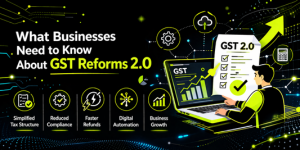
Learn what businesses need to know about GST Reforms 2.0, including compliance changes, e-invoicing, automation, and GST updates.




Introduction
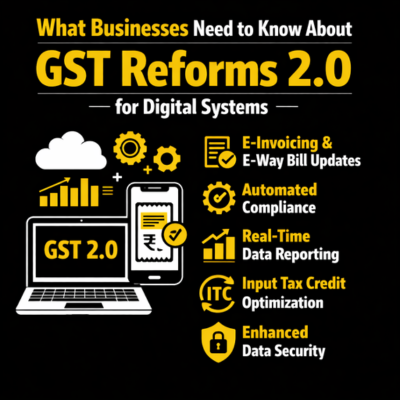
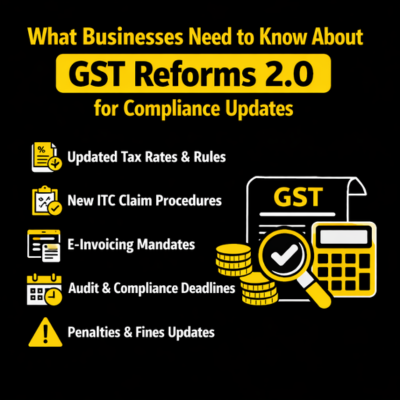
Understanding what businesses need to know about GST Reforms 2.0 is essential for organizations aiming to stay compliant and competitive in India’s evolving tax ecosystem. GST Reforms 2.0 represents the next phase of modernization, focusing on automation, real-time data validation, improved compliance tracking, and seamless integration across systems.
These reforms are designed to simplify tax processes while increasing transparency and reducing tax leakage. Key areas of transformation include e-invoicing expansion, enhanced return filing systems, tighter input tax credit (ITC) rules, and improved analytics by tax authorities. As the government continues to digitize GST processes, businesses must adapt quickly to avoid penalties and operational disruptions.
For companies dealing with large transaction volumes, supply chain complexities, or multi-location operations, these changes can significantly impact daily workflows. Adopting the right digital solutions and compliance strategies is crucial. Businesses that proactively align with these reforms can benefit from improved efficiency, faster filings, and better financial visibility, turning compliance into a strategic advantage rather than a burden.
The transition to GST Reforms 2.0 introduces several critical changes that businesses must understand and implement effectively.
One of the most important aspects is enhanced compliance requirements. With stricter validation and real-time reporting, businesses must ensure accuracy in every transaction.
Key Features of What Businesses Need to Know About GST Reforms 2.0 Solutions
Modern GST solutions offer features that simplify compliance and improve efficiency:
Enterprise-Grade Security by Design
Your data, models, and workflows are protected by modern security standards. Block-AI is built with privacy, compliance, and reliability at its core.
- End-to-end data encryption
- Compliance-ready architecture
Another key factor is automation of tax processes. Manual processes are no longer sustainable, as the new system relies heavily on digital integration and automated workflows.
Improved transparency and tracking also play a major role. Tax authorities now have better visibility into transactions, making it essential for businesses to maintain accurate records.
Additionally, faster reconciliation and return filing help reduce delays and errors. Businesses can streamline their GST filings with pre-filled data and automated systems.
Overall, understanding these reforms enables businesses to minimize risks, improve efficiency, and stay ahead in a competitive market.
Types of What Businesses Need to Know About GST Reforms 2.0 Solutions
Businesses can adopt different solutions to align with GST Reforms 2.0:
- E-Invoicing Compliance Solutions
Automate invoice generation and validation through government portals. - GST Return Automation Systems
Simplify return filing with auto-populated data and error checks. - Input Tax Credit (ITC) Management Tools
Track and validate ITC claims efficiently. - ERP-Integrated GST Solutions
Connect GST processes with accounting and enterprise systems. - Real-Time Data Monitoring Platforms
Monitor transactions and compliance status instantly. - Audit & Compliance Management Systems
Ensure readiness for audits with accurate and organized data. - Custom GST Software Solutions
Tailored platforms designed for specific business needs.
Understanding what businesses need to know about GST Reforms 2.0 provides a strategic advantage by helping organizations stay updated with the latest regulatory changes, compliance requirements, and operational improvements. These reforms introduce simplified processes, enhanced digital systems, and better transparency in taxation, enabling businesses to manage their GST obligations more effectively. By staying informed, businesses can reduce errors, avoid penalties, and optimize input tax credit utilization while ensuring timely return filing. Additionally, awareness of these changes supports better financial planning, smoother operations, and improved decision-making, ultimately contributing to long-term growth and sustainability in a competitive business environment.
Better Awareness
Keeps businesses updated with rules.
Improved Compliance
Ensures accurate GST filing.
Reduced Penalties
Avoids fines through proper knowledge.
Efficient Operations
Streamlines daily business processes.
Business Growth Focused
Designed for lead generation and ROI
Competitive Advantage
Supports growth and scalability.
What Businesses Need to Know About GST Reforms 2.0 Development Process
A structured implementation approach ensures smooth adoption:
- Business Analysis & Compliance Assessment
Evaluate current GST processes and identify gaps. - Solution Design & Planning
Create a scalable framework aligned with new regulations. - System Integration
Connect GST systems with ERP, e-invoicing, and reporting platforms. - Development & Customization
Build features tailored to business workflows. - Data Migration & Setup
Transfer and organize existing GST data securely. - Testing & Validation
Ensure accuracy, compliance, and system performance. - Deployment & Training
Implement the system and train staff for effective use. - Ongoing Support & Updates
Provide continuous monitoring and improvements.
Technology Stack
Modern GST systems rely on advanced technologies:
- Frontend: React.js, Angular, Vue.js
- Backend: Node.js, Python, Java
- Databases: PostgreSQL, MySQL, MongoDB
- Integration: GST APIs, REST APIs
- Cloud Platforms: AWS, Microsoft Azure, Google Cloud
- Analytics Tools: Power BI, Tableau
- Security: SSL encryption, OAuth, multi-factor authentication
Cost Factors of What Businesses Need to Know About GST Reforms 2.0 Solutions
The cost of implementation depends on multiple factors:
- Business size and transaction volume
- Level of customization required
- Integration with existing systems
- Cloud infrastructure and storage needs
- Compliance and security requirements
- Data migration complexity
- Maintenance and support services
- Advanced analytics and reporting features
Latest Trends in What Businesses Need to Know About GST Reforms 2.0
GST continues to evolve with new trends shaping the future:
- Increased adoption of e-invoicing across businesses
- AI-driven compliance and error detection
- Real-time GST data analytics and reporting
- Integration of GST systems with supply chain platforms
- Automation of reconciliation and return filing
- Mobile-based GST management tools
- Enhanced cybersecurity measures
- API-based ecosystems for seamless connectivity
These trends help businesses stay compliant and competitive.
Why Choose Us for What Businesses Need to Know About GST Reforms 2.0 Services
Choosing the right partner can make a significant difference:
- Expertise in GST Reforms 2.0 – Deep understanding of evolving tax regulations
- Customized Solutions – Tailored to your business processes
- Seamless Integration – Easy connectivity with existing systems
- Automation-Driven Approach – Reduce manual work and errors
- Scalable Architecture – Designed to grow with your business
- Advanced Analytics – Gain insights for better decision-making
- High Security Standards – Protect sensitive financial data
- Dedicated Support Team – Continuous assistance and optimization
We help businesses adapt to GST changes efficiently and confidently.
Ready to understand what businesses need to know about GST Reforms 2.0?
Let us help you implement the right GST solutions for compliance and growth.
Contact us today for a free consultation and customized strategy.
FAQ
Businesses must understand new compliance rules, e-invoicing requirements, and automation of GST processes.
They introduce stricter compliance, real-time reporting, and improved transparency in tax processes.
Yes, for businesses meeting specific turnover thresholds, e-invoicing is mandatory.
Automation reduces errors, saves time, and ensures accurate GST filings.
Non-compliance can result in penalties, legal issues, and operational disruptions.
By adopting digital solutions, automating processes, and staying updated with regulations.