



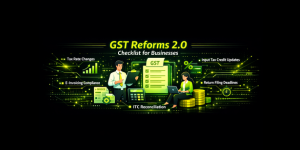
GST Reforms 2.0 checklist for businesses covering compliance, e-invoicing, ITC, and automation. Stay prepared and avoid penalties.



Introduction
Preparing for the evolving tax landscape requires a clear understanding of the GST Reforms 2.0 checklist for businesses. As India moves toward a more digitized and automated GST system, organizations must ensure that their processes, systems, and compliance strategies are fully aligned with the latest reforms.
GST Reforms 2.0 introduces significant changes, including expanded e-invoicing requirements, real-time data validation, tighter input tax credit (ITC) rules, and enhanced integration between GST portals and enterprise systems. These updates are designed to improve transparency, reduce tax evasion, and streamline compliance processes across industries.
For businesses, this means adopting a proactive approach rather than reacting to changes after implementation. A structured checklist helps identify gaps, streamline workflows, and ensure readiness across finance, operations, and IT systems. Whether you are a small business or a large enterprise, having a well-defined compliance checklist can minimize risks, improve efficiency, and support long-term growth in a highly regulated environment.
Adapting to GST changes without a structured approach can lead to compliance risks and operational inefficiencies. This is where a comprehensive checklist becomes essential. One of the primary benefits is complete compliance readiness. Businesses can systematically evaluate whether they meet all regulatory requirements, reducing the chances of penalties or legal issues.
Key Features of GST Reforms 2.0 Checklist for Businesses Solutions
Modern solutions designed around compliance checklists include:
Enterprise-Grade Security by Design
Your data, models, and workflows are protected by modern security standards. Block-AI is built with privacy, compliance, and reliability at its core.
- End-to-end data encryption
- Compliance-ready architecture
Another important factor is process standardization. A checklist ensures that all departments follow consistent procedures, improving coordination between finance, operations, and IT teams.
Risk mitigation is also a major advantage. By identifying gaps early, businesses can address potential issues before they impact operations.
Additionally, improved efficiency is achieved through automation and streamlined workflows. This reduces manual effort and enhances accuracy in GST filings.
Ultimately, a well-structured checklist enables businesses to transition smoothly into the new GST framework while maintaining operational stability.
Types of GST Reforms 2.0 Checklist for Businesses Solutions
Businesses can implement different types of solutions to ensure readiness:
- Compliance Readiness Assessment Tools
Evaluate current GST processes and identify gaps. - E-Invoicing Implementation Solutions
Ensure systems are aligned with invoice generation and validation requirements. - ITC Reconciliation Tools
Track and validate input tax credit claims accurately. - ERP Integration Solutions
Connect GST systems with accounting and enterprise platforms. - Automated GST Filing Systems
Simplify return filing with real-time data synchronization. - Audit & Risk Management Solutions
Prepare for audits with accurate and organized documentation. - Custom Checklist & Workflow Solutions
Tailor processes based on business size and industry needs.
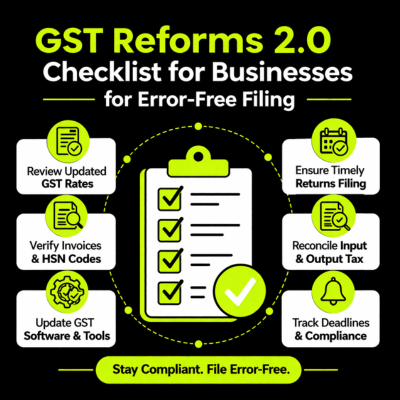
A well-structured GST Reforms 2.0 checklist serves as a practical tool for businesses to systematically manage their compliance requirements and stay aligned with the latest regulatory updates. By following a checklist, businesses can ensure that all necessary steps—such as return filing, invoice verification, input tax credit reconciliation, and documentation—are completed accurately and on time. This approach minimizes the risk of missing critical tasks, reduces errors, and helps avoid penalties. Additionally, a checklist improves internal organization, enhances accountability, and simplifies tax management processes, allowing businesses to operate more efficiently and focus on growth without compliance-related stress.
Complete Compliance
Covers all GST requirements.
Error Reduction
Avoids missed steps and mistakes.
Timely Filing
Ensures deadlines are met.
Better Organization
Keeps records well-structured.
Easy Monitoring
Tracks compliance activities easily.
Efficient Workflow
Simplifies tax management process.
GST Reforms 2.0 Checklist for Businesses Development Process
Implementing a structured checklist requires a systematic approach:
- Assessment of Current Processes
Analyze existing GST workflows and identify gaps. - Checklist Design & Planning
Develop a customized checklist aligned with new regulations. - System Integration
Connect GST systems with ERP and invoicing platforms. - Solution Development & Customization
Build tools and workflows tailored to business needs. - Data Migration & Setup
Organize and transfer GST data into the new system. - Testing & Validation
Ensure accuracy and compliance with updated rules. - Deployment & Training
Implement the solution and train teams effectively. - Continuous Monitoring & Updates
Regularly update the checklist and systems as regulations evolve.
Technology Stack for GST Reforms 2.0 Checklist for Businesses
Modern GST solutions are powered by advanced technologies:
- Frontend: React.js, Angular, Vue.js
- Backend: Node.js, Python, Java
- Databases: PostgreSQL, MySQL, MongoDB
- Integration: GST APIs, REST APIs
- Cloud Platforms: AWS, Microsoft Azure, Google Cloud
- Analytics Tools: Power BI, Tableau
- Security: SSL encryption, OAuth, multi-factor authentication
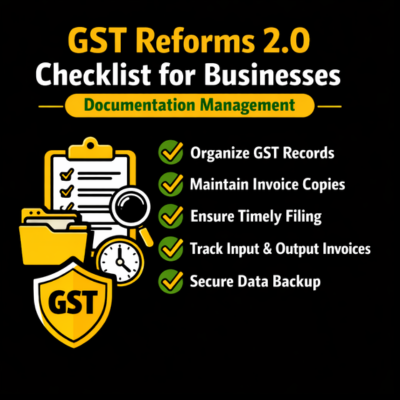
Cost Factors of GST Reforms 2.0 Checklist for Businesses Solutions
The cost of implementing these solutions depends on various factors:
- Business size and transaction volume
- Level of customization required
- Integration complexity with existing systems
- Cloud infrastructure and storage requirements
- Compliance and security features
- Data migration scope
- Maintenance and support services
- Advanced analytics and reporting tools
Latest Trends in GST Reforms 2.0 Checklist for Businesses
The GST ecosystem continues to evolve with emerging trends:
- Increased adoption of automated compliance systems
- AI-driven GST reconciliation and error detection
- Real-time reporting and analytics dashboards
- Integration of GST with supply chain management systems
- Mobile-based GST monitoring solutions
- Enhanced cybersecurity for financial data
- API-based ecosystems for seamless connectivity
- Greater focus on audit readiness and transparency
These trends help businesses stay competitive while maintaining compliance.
Why Choose Us for GST Reforms 2.0 Checklist for Businesses Services
Choosing the right partner ensures a smooth transition to GST Reforms 2.0:
- Expert Knowledge of GST Updates – Stay aligned with the latest regulations
- Customized Checklist Solutions – Designed specifically for your business
- Seamless System Integration – Connect all your platforms efficiently
- Automation-Driven Approach – Reduce manual effort and errors
- Scalable Solutions – Grow with your business needs
- Advanced Analytics & Insights – Make data-driven decisions
- High Security Standards – Protect sensitive business information
- Dedicated Support Team – Continuous guidance and optimization
We help businesses implement structured compliance strategies with confidence.
Ready to implement a GST Reforms 2.0 checklist for businesses effectively?
Let us help you streamline compliance and optimize your GST processes.
Contact us today for a free consultation and customized solution.
FAQ
It is a structured list of compliance requirements and process updates needed to align with new GST regulations.
It ensures that all compliance steps are followed systematically, reducing errors and risks.
It should include e-invoicing, ITC reconciliation, return filing, system integration, and audit readiness.
Yes, solutions can be customized and scaled for businesses of all sizes.
Automation reduces manual errors, saves time, and improves accuracy in filings.
Yes, they integrate seamlessly with ERP and accounting platforms.