

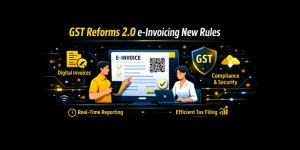
Understand GST Reforms 2.0 E-Invoicing New Rules, compliance updates, thresholds, and automation solutions for seamless GST operations.



Introduction
The introduction of updated e-invoicing regulations under GST marks a significant shift in how businesses manage invoicing, compliance, and reporting. With the government focusing on automation, transparency, and real-time data validation, e-invoicing has become a critical component of tax compliance for businesses of all sizes.
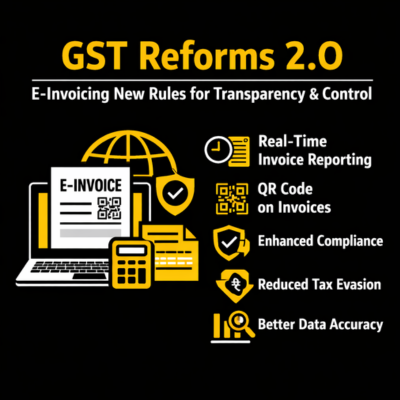
These updates aim to standardize invoice generation, reduce tax evasion, and improve the accuracy of filings. Businesses must now adapt to revised thresholds, stricter validation processes, and enhanced integration with the Invoice Registration Portal (IRP). The changes also emphasize seamless data exchange between systems, minimizing manual errors and improving operational efficiency.
For businesses handling high transaction volumes, adapting to these reforms is essential. Implementing the right e-invoicing solutions ensures compliance, reduces risks of penalties, and enhances financial transparency. By leveraging automation and analytics, organizations can streamline workflows and gain better control over invoicing operations.
Adapting to GST Reforms 2.0 E-Invoicing New Rules is critical for businesses to remain compliant and competitive.
One of the key reasons is mandatory compliance requirements. Businesses crossing specified turnover thresholds must follow strict e-invoicing rules, making automation essential.
Key Features of GST Reforms 2.0 E-Invoicing New Rules Solutions
Our solutions include advanced features to ensure seamless compliance and efficient invoice management:
Enterprise-Grade Security by Design
Your data, models, and workflows are protected by modern security standards. Block-AI is built with privacy, compliance, and reliability at its core.
- End-to-end data encryption
- Compliance-ready architecture
Another key benefit is error reduction. Automated invoice generation minimizes manual entry errors, ensuring accurate tax calculations and reporting.
Improved transparency is also a major advantage. With real-time data sharing between businesses and tax authorities, discrepancies are reduced, and audit processes become smoother.
Additionally, faster return filing is enabled as invoice data is automatically populated into GST returns, reducing workload and saving time.
Overall, these changes help businesses stay compliant, efficient, and future-ready.
Types of GST Reforms 2.0 E-Invoicing Solutions
Businesses can choose from various solutions depending on their operational needs:
- Automated E-Invoicing Systems
Generate and validate invoices automatically through IRP integration. - Cloud-Based E-Invoicing Platforms
Access invoicing systems from anywhere with secure cloud infrastructure. - ERP-Integrated E-Invoicing Solutions
Seamlessly connect invoicing with ERP, accounting, and billing systems. - Bulk Invoice Processing Solutions
Handle large volumes of invoices efficiently with minimal manual effort. - Compliance Management Systems
Ensure adherence to tax rules with automated validation and reporting. - Real-Time Reporting Dashboards
Monitor invoice status, errors, and compliance metrics instantly. - Custom E-Invoicing Solutions
Tailored systems designed for specific business workflows and industries.
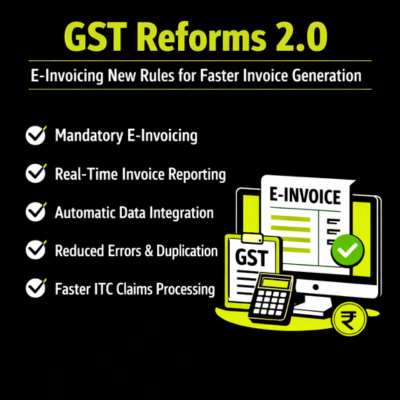
GST Reforms 2.0 introduces updated e-invoicing rules that significantly improve the efficiency and reliability of invoicing processes for businesses. These new rules promote automation, reduce manual intervention, and ensure real-time reporting of invoices to the GST system. By standardizing invoice formats and integrating them with digital platforms, businesses can achieve greater accuracy in tax calculations and reporting. The reforms also help minimize discrepancies in input tax credit claims, speed up return filing, and enhance transparency across transactions. Overall, the new e-invoicing framework simplifies compliance while enabling businesses to operate with greater confidence and efficiency.
Automated Invoicing
Reduces manual billing efforts.
Real-Time Reporting
Instant invoice data submission.
Higher Accuracy
Minimizes calculation errors.
Faster Return Filing
Speeds up GST compliance.
Better ITC Matching
Reduces credit mismatches.
Improved Transparency
Clear and standardized invoices.
GST Reforms 2.0 E-Invoicing New Rules Development Process
- Requirement Analysis & Compliance Assessment
Evaluate business operations, turnover, and regulatory requirements. - System Design & Architecture Planning
Build a scalable framework aligned with GST Reforms 2.0 guidelines. - Integration with GST & IRP Systems
Ensure seamless connectivity for real-time invoice validation. - Development & Automation Implementation
Create automated workflows for invoice generation and reporting. - Data Mapping & Validation
Align invoice data with GST formats and compliance standards. - Testing & Quality Assurance
Validate system performance, accuracy, and compliance readiness. - Deployment & User Training
Launch the solution and train teams for efficient usage. - Ongoing Support & Compliance Updates
Continuously update the system as GST rules evolve.
Technology Stack for GST Reforms 2.0 E-Invoicing New Rules
- Frontend: React.js, Angular, Vue.js
- Backend: Node.js, Python, Java
- Databases: PostgreSQL, MySQL, MongoDB
- Integration: GST APIs, IRP APIs, REST APIs
- Cloud Platforms: AWS, Microsoft Azure, Google Cloud Platform
- Analytics Tools: Power BI, Tableau
- Security: SSL encryption, OAuth, multi-factor authentication
Cost Factors of GST Reforms 2.0 E-Invoicing New Rules Solutions
- Business transaction volume and invoice frequency
- Level of automation and customization required
- Integration with ERP and financial systems
- Cloud infrastructure and storage requirements
- API integration complexity
- Advanced analytics and reporting features
- Compliance and security requirements
- Ongoing maintenance and support services
Latest Trends in GST Reforms 2.0 E-Invoicing New Rules
- AI-driven invoice validation and error detection
- Real-time compliance monitoring dashboards
- Cloud-native e-invoicing platforms
- Integration with e-way bill and logistics systems
- Automation of GST return filing processes
- Mobile-based invoicing and reporting tools
- Blockchain for secure invoice tracking
- Enhanced cybersecurity measures for financial data
Why Choose Us for GST Reforms 2.0 E-Invoicing New Rules Services
- Deep GST Expertise – Strong understanding of evolving GST regulations
- End-to-End Automation – Complete invoicing and compliance solutions
- Custom-Built Systems – Tailored to your business workflows
- Seamless Integration – Works smoothly with ERP and accounting tools
- Real-Time Insights – Data-driven dashboards for better decisions
- High Security Standards – Protect sensitive financial data
- Scalable Infrastructure – Designed to grow with your business
- Dedicated Support Team – Continuous monitoring and updates
Ready to comply with GST Reforms 2.0 E-Invoicing New Rules effortlessly?
Let’s build a smart, automated, and compliant invoicing system for your business.
Contact us today for a free consultation and customized solution.
FAQ
They are updated regulations under GST that introduce stricter e-invoicing compliance, real-time reporting, and enhanced validation processes.
Businesses exceeding specified turnover thresholds must comply with mandatory e-invoicing requirements.
Invoice Reference Number (IRN) is a unique identifier generated by the IRP for every validated invoice.
Non-compliance may lead to penalties, invalid invoices, and disruption in business operations.
It ensures real-time validation, reduces errors, and enables accurate reporting to GST systems.
Yes, we offer complete support including setup, integration, and ongoing compliance updates.