




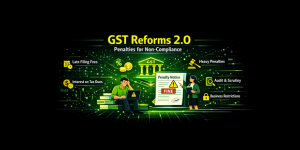
Understand GST Reforms 2.0 penalties for non-compliance. Avoid fines, ensure compliance, and protect your business with expert solutions.




Compliance Enforcement
Introduction
The introduction of GST Reforms 2.0 penalties for non-compliance marks a significant shift in India’s taxation landscape, emphasizing stricter enforcement, real-time monitoring, and enhanced accountability. As the Goods and Services Tax system evolves, the government is focusing on minimizing tax evasion, improving transparency, and ensuring timely compliance through advanced digital frameworks.
Under GST 2.0, penalties are no longer limited to late fees or minor fines—they now include stricter consequences such as automated penalty calculations, suspension of GST registration, restrictions on input tax credit (ITC), and even legal actions in severe cases. With real-time data integration and AI-driven compliance checks, businesses are expected to maintain accurate records, timely filings, and proper documentation.
For businesses of all sizes, understanding these penalties is essential to avoid financial losses and reputational risks. A proactive approach to compliance ensures smoother operations, better financial planning, and reduced exposure to regulatory actions.
Our GST compliance solutions are designed to help businesses understand, manage, and avoid GST Reforms 2.0 penalties effectively.
GST 2.0 introduces a stricter compliance framework, making it crucial for businesses to stay aligned with updated regulations.
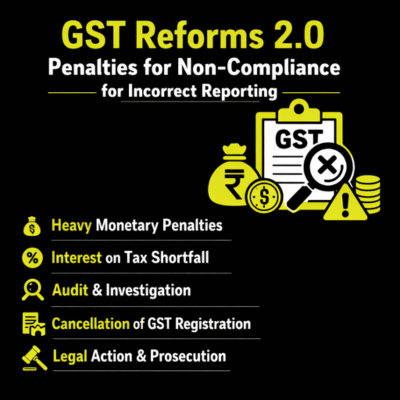
One of the key reasons this service is important is risk mitigation. Non-compliance can lead to significant penalties, including heavy fines, interest charges, and operational disruptions
Key Features of GST Reforms 2.0 Penalties for Non-Compliance Solutions
Our services are equipped with advanced features to ensure compliance:
Enterprise-Grade Security by Design
Your data, models, and workflows are protected by modern security standards. Block-AI is built with privacy, compliance, and reliability at its core.
- End-to-end data encryption
- Compliance-ready architecture
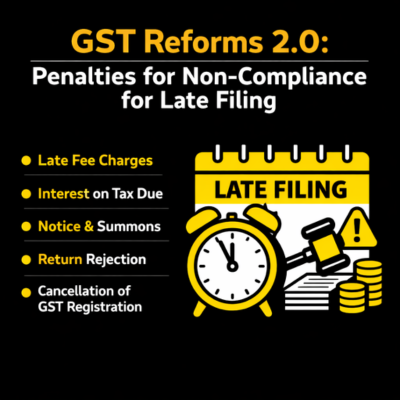
Businesses that fail to adapt to new requirements may also face suspension or cancellation of GST registration.
Another critical factor is automation in compliance monitoring. GST systems now track transactions in real time, making it easier for authorities to detect discrepancies. Without proper systems in place, businesses may unintentionally violate rules.
Financial impact is also a major concern. Penalties and interest charges can directly affect profitability, especially for small and medium enterprises.
Additionally, compliance enhances business credibility. Organizations that follow GST regulations build trust with stakeholders, customers, and authorities.
Overall, professional support ensures businesses remain compliant, avoid penalties, and operate smoothly under GST 2.0.
Types of GST Reforms 2.0 Penalties for Non-Compliance Solutions
We provide comprehensive solutions to help businesses prevent and manage GST penalties:
- GST Compliance Audit Services
Identify compliance gaps and potential penalty risks. - Penalty Risk Assessment & Advisory
Analyze business operations to detect areas prone to non-compliance. - Automated Compliance Monitoring Solutions
Implement systems for real-time tracking of GST filings and transactions. - GST Filing & Reconciliation Services
Ensure accurate and timely return filing to avoid late fees. - Input Tax Credit (ITC) Validation Solutions
Prevent incorrect claims that may lead to penalties. - Notice Handling & Dispute Resolution
Expert support for responding to GST notices and legal issues. - GST Training & Awareness Programs
Educate teams on compliance requirements and penalty avoidance.
The introduction of stricter and more structured penalties under GST Reforms 2.0 plays a vital role in promoting tax discipline and ensuring a level playing field for all businesses. By clearly defining consequences for non-compliance—such as delayed filings, incorrect reporting, or tax evasion—the system discourages fraudulent practices and encourages timely and accurate submissions. These penalties are not just punitive but also corrective, pushing businesses toward better compliance habits while improving overall transparency in the tax ecosystem. As a result, GST Reforms 2.0 helps build a more accountable, efficient, and trustworthy taxation environment that benefits both the government and compliant taxpayers.
Strong Compliance
Encourages timely filing and rule adherence.
Less Tax Evasion
Discourages fraud with strict penalties.
Fair Competition
Protects honest businesses from unfair practices.
Better Revenue
Improves tax collection and reduces leakages.
Clear Rules
Defines penalties clearly, reducing confusion.
Accurate Records
Promotes proper reporting and documentation.
GST Reforms 2.0 Penalties for Non-Compliance Development Process
We follow a structured process to ensure effective implementation:
- Compliance Assessment & Gap Analysis
Evaluate current GST practices and identify potential risks. - Penalty Risk Identification
Analyze areas where non-compliance may occur. - Solution Design & Strategy Planning
Develop a customized compliance and penalty prevention strategy. - System Integration & Automation
Implement tools for real-time compliance monitoring. - Data Validation & Reconciliation
Ensure accuracy in financial and tax records. - Testing & Compliance Verification
Validate system performance and compliance readiness. - Training & Deployment
Train teams and deploy solutions across operations. - Ongoing Monitoring & Support
Provide continuous updates and compliance tracking.
Technology Stack
We use advanced technologies to deliver efficient solutions:
- Frontend: React.js, Angular, Vue.js
- Backend: Node.js, Python, Java
- Databases: PostgreSQL, MySQL, MongoDB
- Integration: GST APIs, REST APIs
- Cloud Platforms: AWS, Microsoft Azure, Google Cloud
- Analytics Tools: Power BI, Tableau
- Security: SSL encryption, OAuth, role-based access control
Cost Factors of GST Reforms 2.0 Penalties for Non-Compliance Services
The cost of implementing compliance solutions depends on several factors:
- Business size and transaction volume
- Complexity of GST operations
- Level of automation required
- ERP and system integration needs
- Data reconciliation and audit requirements
- Customization and reporting features
- Ongoing compliance monitoring services
Latest Trends in GST Reforms 2.0 Penalties for Non-Compliance
The GST compliance ecosystem is rapidly evolving with new trends:
- AI-driven compliance monitoring and fraud detection
- Real-time GST reporting and validation systems
- Automated penalty calculation mechanisms
- Integration with e-invoicing and e-way bill systems
- Cloud-based compliance platforms
- Predictive analytics for risk management
- Increased focus on data accuracy and transparency
- Enhanced cybersecurity for financial data
These trends highlight the importance of adopting modern compliance solutions.
Why Choose Us for GST Reforms 2.0 Penalties for Non-Compliance Services
Selecting the right partner ensures long-term compliance success:
- Expert GST Knowledge – Deep understanding of GST 2.0 regulations
- End-to-End Compliance Support – From audit to implementation
- Customized Solutions – Tailored to your business needs
- Advanced Automation Tools – Reduce manual errors and risks
- Seamless Integration – Easy connectivity with existing systems
- Scalable Solutions – Grow with your business
- Strong Data Security – Protect sensitive financial information
- Dedicated Support Team – Continuous assistance and updates
We help businesses minimize risks and avoid GST penalties effectively.
Worried about GST penalties under GST Reforms 2.0?
Let us help you stay compliant and avoid costly mistakes.
Contact us today for expert guidance and a customized compliance solution.
FAQ
They are penalties imposed on businesses for failing to meet updated GST 2.0 requirements, including late filings, incorrect reporting, and tax evasion.
Penalties include fines, interest charges, suspension of GST registration, ITC restrictions, and legal actions in severe cases.
By ensuring timely filings, accurate reporting, proper documentation, and using automated compliance tools.
Late filing results in penalties and interest charges, which can increase over time.
In some cases, authorities may allow waivers or reductions based on specific conditions.
It uses real-time data integration and automation to detect discrepancies and enforce rules.