




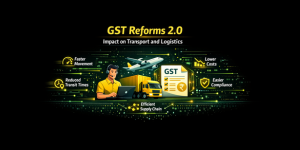
Explore GST Reforms 2.0 impact on transport and logistics, cost changes, compliance updates, and efficiency strategies.




Introduction
GST Reforms 2.0 impact on transport and logistics is transforming how goods move across India’s supply chain ecosystem. The transport and logistics sector plays a critical role in economic growth, connecting manufacturers, distributors, and consumers. With the introduction of GST Reforms 2.0, businesses in this sector are experiencing significant changes in tax structures, compliance requirements, and operational strategies.
The updated GST framework focuses on simplifying tax slabs, improving input tax credit (ITC) flow, and enhancing digital compliance systems. For logistics companies, this means better cost transparency, reduced tax cascading, and improved operational efficiency. Transport operators benefit from streamlined documentation processes, while warehousing businesses gain from improved tax clarity.
However, adapting to these reforms requires logistics companies to upgrade systems, optimize routes and pricing models, and ensure accurate tax reporting. Compliance with updated GST rules related to invoicing, return filing, and ITC reconciliation is essential to avoid penalties and inefficiencies.
Understanding GST Reforms 2.0 impact on transport and logistics is crucial for businesses aiming to reduce costs, improve efficiency, and stay competitive in a rapidly evolving supply chain landscape.
The logistics sector operates on high-volume transactions and complex supply chains, making GST updates highly impactful.
One key benefit is cost efficiency, as simplified tax structures reduce cascading taxes.
Another advantage is improved supply chain transparency, enabling better tracking and reporting.
Key Features of GST Reforms 2.0 Impact on Transport and Logistics Solutions
Our solutions include advanced features to support logistics operations:
Enterprise-Grade Security by Design
Your data, models, and workflows are protected by modern security standards. Block-AI is built with privacy, compliance, and reliability at its core.
- End-to-end data encryption
- Compliance-ready architecture
Businesses also benefit from enhanced ITC utilization, improving cash flow management.
However, the reforms introduce compliance challenges, requiring system upgrades and process adjustments.
Automation and digital tools are essential to manage these changes effectively.
Understanding these impacts helps logistics businesses remain competitive and compliant.
Types of GST Reforms 2.0 Impact on Transport and Logistics Solutions
We provide tailored solutions for logistics and transport businesses:
- GST Impact Analysis for Logistics Sector
Evaluate how tax changes affect operations and costs. - Freight Cost Optimization Solutions
Improve pricing strategies and reduce transportation costs. - Supply Chain Optimization Solutions
Enhance efficiency across logistics operations. - ITC Optimization & Reconciliation Solutions
Maximize input tax credit benefits and accuracy. - Compliance Management Solutions
Ensure adherence to updated GST regulations. - Fleet & Route Optimization Solutions
Improve operational efficiency and reduce expenses. - ERP & System Integration Services
Align logistics systems with GST requirements.
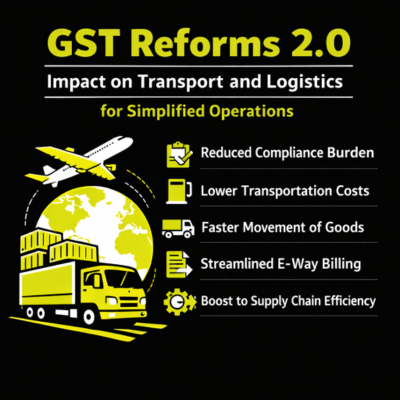
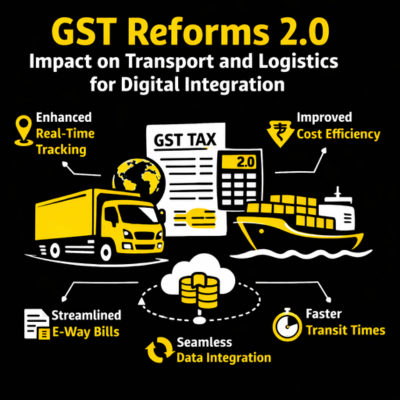
GST Reforms 2.0 brings significant improvements to the transport and logistics sector by simplifying tax procedures, enhancing digital integration, and reducing operational bottlenecks. With more streamlined compliance requirements and better coordination between systems, logistics companies can manage documentation, invoicing, and tax filing more efficiently. These reforms help minimize delays at checkpoints, improve tracking of goods movement, and ensure faster processing of returns and refunds. As a result, businesses experience improved cash flow, reduced operational costs, and greater overall efficiency in supply chain management, ultimately contributing to faster and more reliable delivery services across regions.
Faster Goods Movement
Reduces delays in transportation.
Simplified Documentation
Easier handling of logistics paperwork.
Lower Operational Costs
Cuts unnecessary expenses.
Improved Tracking
Better visibility of shipments.
Faster Refunds
Enhances cash flow for businesses.
Supply Chain Efficiency
Optimizes end-to-end logistics operations.
GST Reforms 2.0 Impact on Transport and Logistics Development Process
We follow a structured approach for successful implementation:
- Business Assessment & Logistics Review
Analyze transport operations and tax structure. - Impact Analysis of GST Changes
Evaluate how reforms affect costs, pricing, and compliance. - Strategy Development & Planning
Create customized strategies for adaptation. - System Integration & Automation Setup
Implement tools for compliance and reporting. - Cost & Route Optimization
Improve operational efficiency and reduce expenses. - Testing & Compliance Validation
Ensure accuracy and adherence to GST rules. - Deployment & Training
Implement solutions and train teams. - Ongoing Monitoring & Updates
Continuously adapt to regulatory changes.
Technology Stack
We use modern technologies to deliver scalable and secure solutions:
- Frontend: React.js, Angular, Vue.js
- Backend: Node.js, Python, Java
- Databases: PostgreSQL, MySQL, MongoDB
- Integration: GST APIs, REST APIs
- Cloud Platforms: AWS, Microsoft Azure, Google Cloud Platform
- Analytics Tools: Power BI, Tableau
- Security: SSL encryption, OAuth, role-based access control
Cost Factors of GST Reforms 2.0 Impact on Transport and Logistics Services
The cost of implementation depends on several factors:
- Scale of logistics operations and fleet size
- Volume of transactions and shipments
- Level of automation required
- Integration with ERP and fleet management systems
- Customization based on business needs
- Advanced analytics and reporting features
- Cloud infrastructure and storage
- Ongoing maintenance and support
Latest Trends in GST Reforms 2.0 Impact on Transport and Logistics
The logistics sector is evolving with GST-related trends:
- Simplification of tax structures and reduced slab complexity
- Increased adoption of automated compliance systems
- Real-time GST tracking and analytics
- Integration with fleet and warehouse management systems
- AI-driven route and cost optimization
- Cloud-based logistics management platforms
- Enhanced ITC validation and fraud detection
- Focus on transparency and operational efficiency
These trends help logistics businesses stay competitive and compliant.
Why Choose Us for GST Reforms 2.0 Impact on Transport and Logistics Services
Choosing the right partner ensures successful adaptation:
- Deep Logistics Expertise – Strong understanding of transport and supply chains
- Accurate Impact Analysis – Clear insights into GST changes
- Custom Solutions – Tailored to your business needs
- Advanced Automation – Improve efficiency and reduce errors
- Seamless Integration – Connect with existing systems easily
- Scalable Infrastructure – Designed for growth
- High Security Standards – Protect sensitive data
- Dedicated Support – Continuous guidance and updates
We help logistics businesses turn GST changes into operational advantages.
Ready to optimize your transport and logistics operations under GST reforms?
Let’s build a smart system for compliance, efficiency, and cost savings.
Contact us today for a free consultation and customized solution.
FAQ
It refers to how updated GST rules affect logistics operations, costs, and compliance.
They influence tax rates, ITC utilization, and overall transportation expenses.
Input tax credit allows businesses to offset taxes paid on inputs like fuel and services.
Yes, automation and integration are essential for compliance.
By simplifying tax structures and improving cost transparency.
Penalties, audits, and operational disruptions.